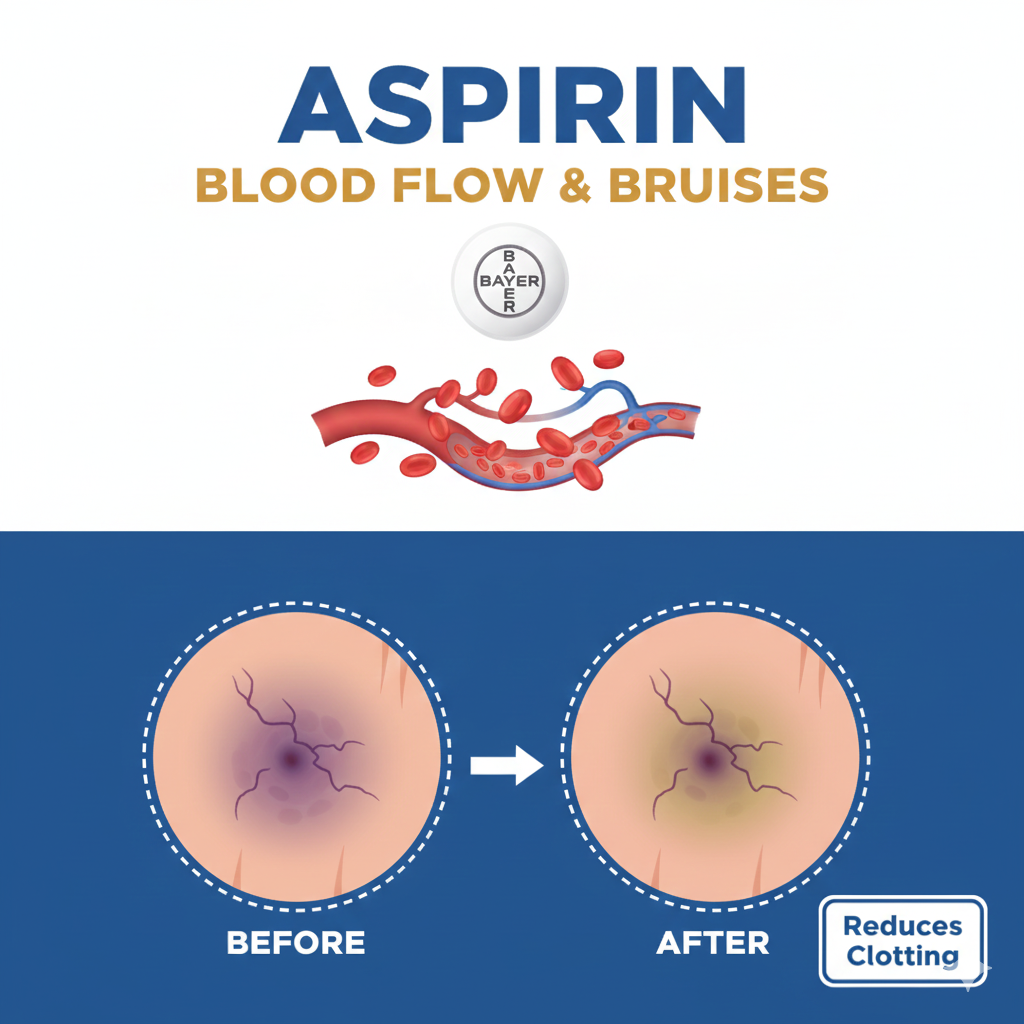
President Trump recently revealed in a detailed interview that he takes a large daily dose of aspirin — much more than most doctors recommend — because he believes it helps thin his blood and keep his heart healthy.
He says he’s been taking 325 mg of aspirin per day for about 25 years — that’s the full-strength “adult” dose, not the low-dose baby aspirin (usually around 81 mg) many doctors suggest for heart support.
Why this matters for beauty & wellness: Aspirin interferes with how your blood clots. For some people, that can mean bruising easily, which shows up as discolored skin even from minor bumps — something that’s been visible on his hands in photos.
Daily Aspirin: Good, Bad, or Just Unnecessary?
Here’s what experts say — and what you should understand before following anyone’s routine:
What Aspirin Can Do
- At low doses, aspirin can reduce the blood’s ability to clot — that’s why doctors sometimes prescribe it after certain heart procedures
What Aspirin Does Not Need to Do
- For most adults over 60, routine daily aspirin isn’t widely recommended unless there’s a specific cardiac history. Some health authorities even suggest stopping daily aspirin around age 75

- #1 Doctor Recommended: Bayer Aspirin is the #1 doctor recommended aspirin brand
- Protect Your Heart: Bayer Aspirin Low Dose can be used by adults whose doctors recommend a low dose aspirin regimen
- Aspirin is not appropriate for everyone, so be sure to talk to your doctor before you begin an aspirin regimen
Side Effects to Watch
Aspirin can cause:
- easy bruising and small cuts that bleed more (kind of like what’s been seen on his hands),
- stomach irritation or increased risk of internal bleeding,
- and — in rare cases — ringing in the ears (tinnitus).
So if you’re using aspirin for beauty or wellness reasons, know that more isn’t always better, and higher doses come with higher risk — especially if you don’t have a clear medical reason for taking it.
Bruising & Skin Health: What Causes It?
Bruising easily can be from lots of things, especially as we get older:
- thinner skin
- fragile capillaries
- medications that affect clotting
- even certain supplements.
Aspirin’s blood-thinning effect can make bruises more visible — not necessarily deeper injuries — but it does mean your skin might show marks even when you barely bump into something.
healthandme.com
For beauty lovers, this is worth knowing because:
- Visible bruises can make your skin look uneven
- Heavy makeup may temporarily hide marks but doesn’t treat the cause
- Supporting skin health from the inside (hydration, vitamin C, collagen) can help with recovery
Bottom Line: Think Before You Pop
Aspirin isn’t just a pain reliever — it’s a medicine with real effects on your blood and skin. Unless your doctor specifically tells you to take it, don’t start or increase your dosage based on internet tips or someone else’s routine. Low-dose and high-dose aspirin affect your body differently, and what works for one person may not be right for you










Leave a Reply